

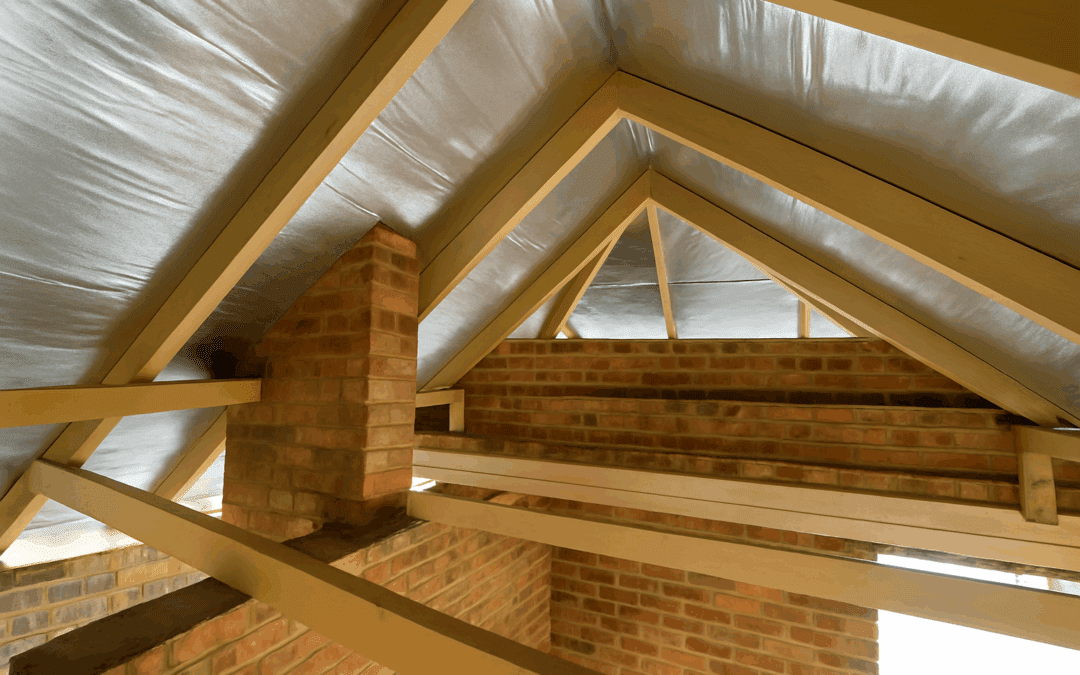
When we think about roofing, most of us picture the visible elements – tiles, ridges, and gutters. But there’s more to a roof than what meets the eye. Roofing underlays, such as the undertile membrane and the radiant barrier, play their own special role in safeguarding your home from moisture, dust, heat, and energy loss.
What is a roofing underlay?
As a homeowner, it’s easy to feel overwhelmed by all the construction and contractor jargon. Let’s simplify one important term: roofing underlay. This is a protective layer installed beneath your roof tiles, acting as a secondary barrier against various elements like wind-driven rain, dust, and moisture. The underlay adds an extra layer of protection to keep your home safe and dry, and depending on the type of underlay – with additional benefits such as improved indoor comfort, and reduced energy consumption.
In modern roofing systems, there are two key types of underlays commonly used: membranes and foil barriers. Whether you’re focused on energy efficiency or added weather resistance, there’s a solution to fit your project.
We’ll look at what each underlay has to offer and what we’d recommend.
The Marley Undertile Membrane:
When heavy rain or strong winds hit, roof tiles carry the load, rain can sometimes push in especially if you have a low-pitched roof.
Click HERE to learn more on the minimum roof slopes of the different types of roofing materials.
This lightweight, waterproof layer is installed directly beneath your tiles to:
- Block water ingress from wind-driven rain or cracked tiles
- Prevent dust and debris from entering the ceiling cavity
- Provide temporary waterproofing during roof construction
Including an undertile membrane in your roof assembly isn’t just a precaution, it’s a smart investment, especially with South Africa’s unpredictable climate, it can mean the difference between a dry, secure home and expensive water damage.
The Marley Radiant Barrier also referred to as a Foil Barrier:
This is a reflective foil barrier, also installed beneath your roof tiles, that improves indoor comfort and temperature control. Using Marley’s Superior Double-Sided Radiant Barrier would be your best choice as it provides the best-in-class, as a part of a dual insulation system – removing the need, in certain cases, to include further extra thick bulk insulation to achieve the required deemed to satisfy R-value for a roofing system.
The R-Value is a measurement of an insulation material’s ability to resist heat transfer – the higher the R-value the better the insulation performance. When this material is installed, radiation from the sun is blocked during hot summer months and combining it with a thinner bulk insulation, seals the loft that prevents heat losses during the winter, therefore reducing the need for heating and cooling.
Last, but not least – IT’S THE LAW!
It is now mandatory in South Africa to specify thermal insulation in all building occupancy classes in accordance with SANS 10400-XA: 2021 – ensuring that the roof envelope complies with the recommended R-value for the relevant energy zones.
Not only this, but the insulation material must comply with the fire safety requirements given in SANS 10177-2 and SANS 53501-1
Where It All Adds Value
Whether you’re building or upgrading, a quality underlay is a long-term investment for your home. The benefits may not be visible from the outside, but you’ll notice the difference every day inside your home.
Watch our YouTube video on ‘How to install radiant barriers (foil barriers) the South African way’ HERE
Ready to upgrade your roof or start your project with the right protection?
Ask your roofer about including Marley Roofing’s underlay’s in your build, or reach out to us directly for expert guidance and a list of approved suppliers near you.
Send us a WhatsApp on 083 345 7343 or give us a call on 010 600 0284.